
Fans follow sport across more channels than ever. This post maps how they actually move between TV, streaming, social, and mobile — and makes the case for where your organization should be investing.


Sports organizations are making channel decisions right now that will define their fan relationships for the next decade. Most are over-invested in platforms they don't control and under-invested in the ones that actually build lasting revenue.
This is a tour of the main digital channels fans use today, what each one is genuinely good for, and why the conversation ends with your own app.
TV and streaming: where fans still watch the game
Television and streaming are still where the vast majority of fans watch live sport, and sports professionals consistently underestimate this. In our 2023 State of Sports Fan Engagement research with iSportConnect, only 2% of sports industry professionals named TV as the channel fans use most. That's a significant misread, and it shapes budget decisions across the industry.

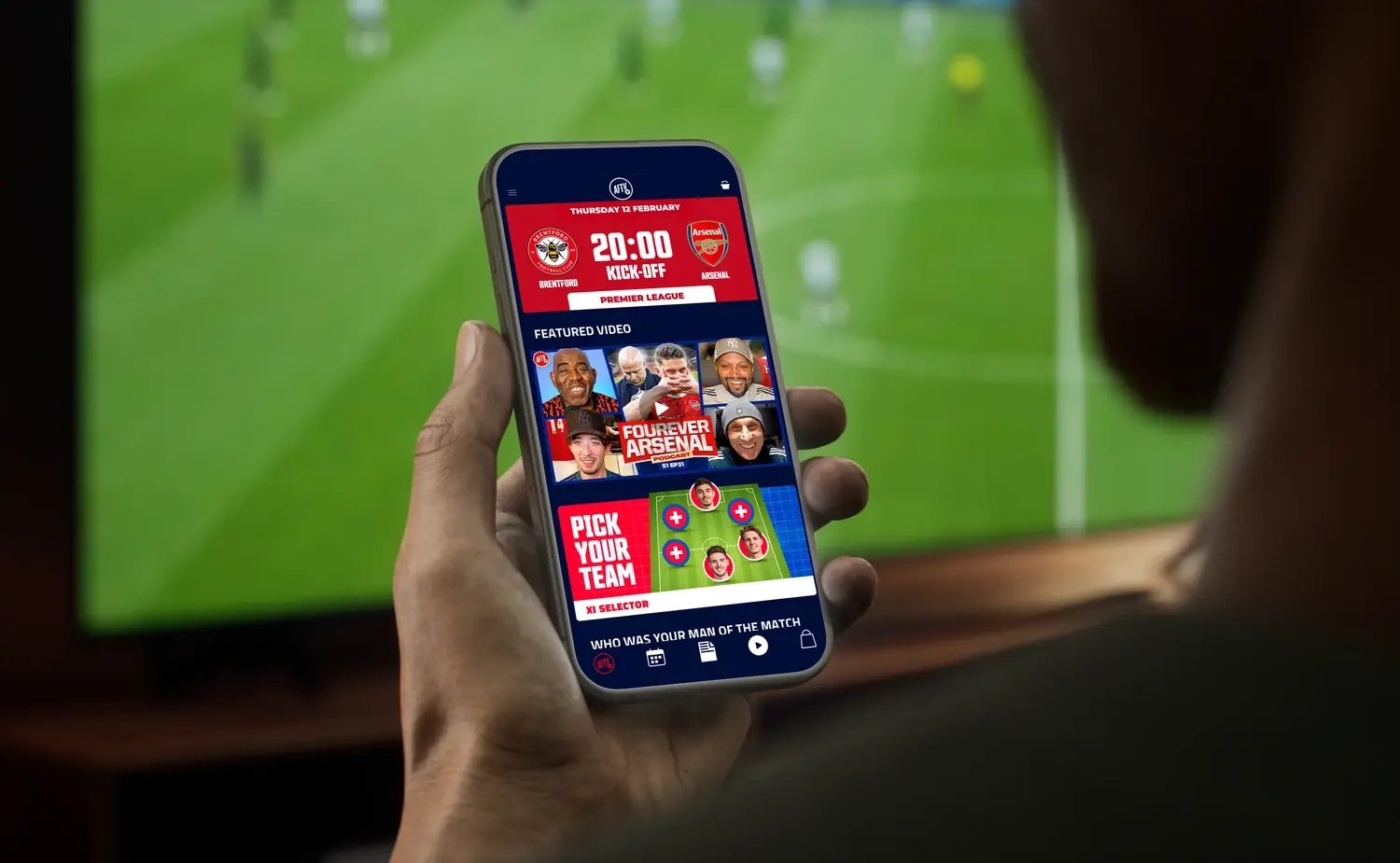
In Arsenal Fan TV app, the user can predict the team's opening lineup
What has genuinely shifted is the definition of "watching TV." Streaming now accounts for 45.7% of total sports viewing according to Nielsen, growing at over 8% year on year. According to GWI, 27% of fans still watch games on traditional TV weekly while 23% stream them online, a gap that's closing fast, led by younger fans who are increasingly willing to pay for content directly from their favorite leagues.
For sports organizations, this creates two different questions depending on your situation. If you hold broadcasting rights, the value of those rights is increasingly realized through streaming deals, and that's where negotiating strength lies. If you don't have a rights deal at all, launching your own direct-to-consumer stream has never been more accessible. Helsinki Cup, Europe's third-largest junior football tournament, charges a small fee for live streams through their app. The International Judo Federation offers theirs free to maximize reach. Both approaches work; it's a business model choice, not a technical constraint.
Hosted video platforms differ sharply in how they charge once an audience grows, and per-viewer and bandwidth-based models diverge fast at tournament scale. If Uscreen is on your shortlist, comparing it against a uscreen ott alternative or two is worth the hour before you commit.
Either way, the strategic point is the same: when live streaming lives inside your own app, you own the viewer relationship, the data, and the monetization.
Social media: reach without ownership
Social media is where fans discover content, follow athletes, and react to moments in real time. That's real value. According to GWI, the share of Americans watching live sports on social media grew 34% between 2020 and 2024.
But there's a ceiling to what social can do for a sports organization, and most have already hit it.
Your follower count doesn't tell you who your fans are, where they live, what they buy, or how engaged they actually are. You can't send a push notification when your starting lineup drops. You can't offer a personalized ticket deal based on attendance history. You can't monetize directly without paying the platform. And when the algorithm changes, your reach changes with it.
Social is rented attention. It's valuable for top-of-funnel reach and content discovery. It's a poor foundation for a fan relationship strategy.
According to Stats Perform's 2026 Fan Engagement and Monetisation report (675 sports media executives surveyed), owned apps are expected to overtake websites as the primary digital fan engagement channel by 2030, and owned platforms already generate twice the revenue of social media for sports organizations. The industry knows where this is heading.
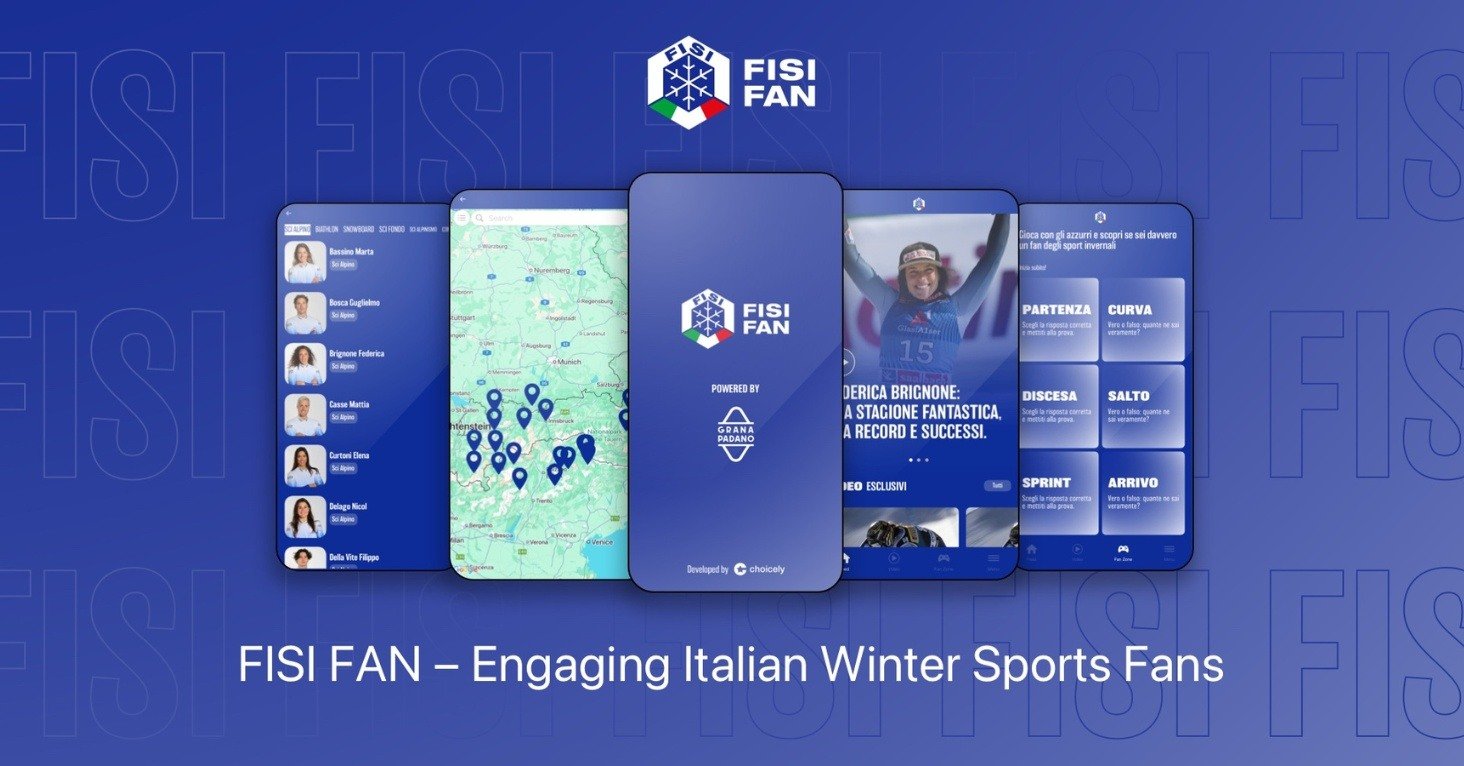
The Italian Winter Sports Federation has an expansive fan zone within their app
Second screening: the real match day opportunity
Here's what actually happens during a live sports event. Fans watch the game on TV or a streaming service, and they have their phones in hand. Multiple sources prove this:
According to Deloitte's 2023 Sports Fan Insights, 77% of fans participated in at least one concurrent digital activity while watching sports at home.
Among Gen Z, it's essentially universal: GWI reports they're 21% more likely than average to be gaming on mobile while watching sport, and 20% more likely to be on social media simultaneously.
The fans already have their phone in their hand. The question is what they're doing with it, and whether any of it is happening in your channel.
Most organizations don't have a good answer. Fans pull up Twitter, check a stats site, or open a third-party app. The opportunity is to give them a reason to stay in your own ecosystem instead: live polls, real-time stats, prediction games, push notifications timed to match moments.
The numbers support this strongly. IBM's 2025 Sports Fan Survey of over 20,000 fans across 12 countries found that 82% of in-person event attendees use apps during events, and 91% of those engage with them for real-time commentary, stats, and enhanced experiences. Multi-device usage to follow sports grew from 27% to 29% in a single year between 2024 and 2025.
Every fan already has their phone out at the match. Most sports organizations just aren't giving them anywhere useful to go.
Your app: the channel worth building
An owned fan app gives you something no other channel does: a direct, data-rich relationship with each fan, on a platform you control.
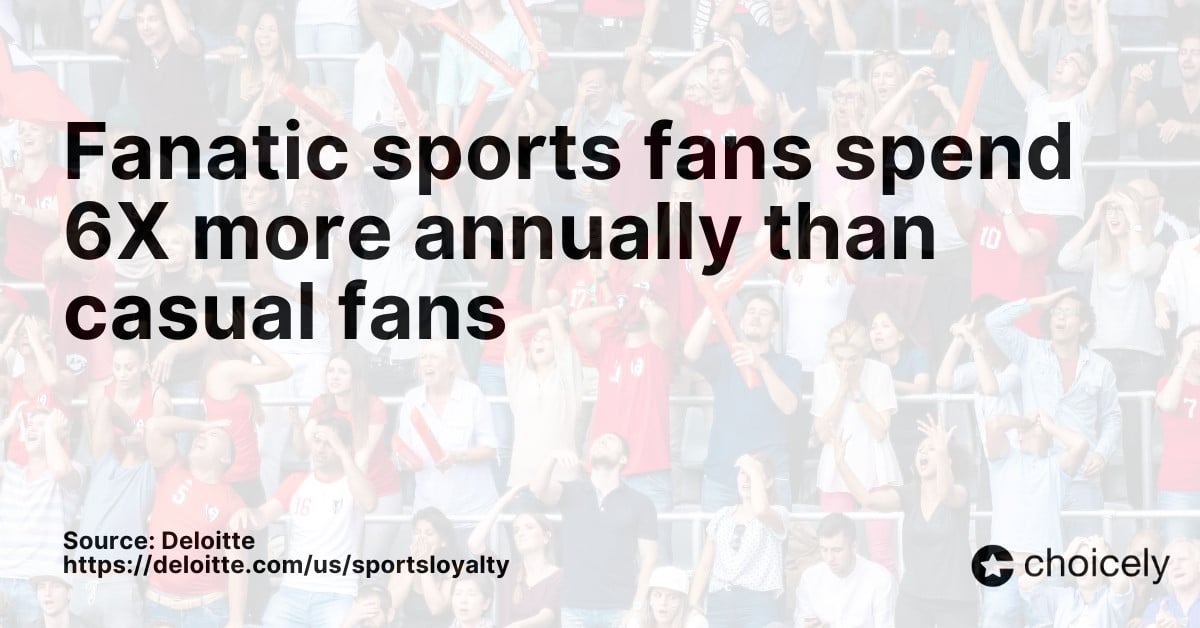
According to Deloitte, fanatic fans spend 6x more annually than casual fans. Identifying who those people are, deepening their engagement, and converting it to revenue requires a direct channel. One where you can see what fans do, personalize their experience, and reach them without paying a third party for access to their own attention.
Building that channel used to mean a six-figure development budget and an 18-month timeline. AI app builders have changed that equation significantly. Projects that previously took months can now reach a working product in weeks, with development timelines reduced by up to 90% depending on scope. That means smaller sports organizations can now own their fan relationship without waiting years for the investment to make sense.
When a fan downloads your app, they're giving your brand a home on their phone. That's a qualitatively different relationship than a social follow. And according to Deloitte's 2026 Digital Media Trends research, roughly 70% of Gen Z and Millennials are comfortable granting access to their browsing data, purchase history, and app usage in exchange for a more personalized experience. They want you to know them. An owned app is how you do that.
Fan clubs like AFTV and federations like FISI (Italian Winter Sports Federation) have built communities through owned apps that operate independently of any social platform, fans they can reach directly, at any moment, without algorithmic interference.
What a fan app looks like in practice
A strong fan app isn't a schedule display with push notifications. Done well, it becomes the hub of everything a fan does with your brand.
During the match: Live polls, real-time stats, match commentary, voting features, gamification (leaderboards, prediction games), AI-powered personalization, push notifications that react to what's happening on the pitch. See some examples of fan engagement features you can build into your app.
Between matches: Articles, videos, player profiles, highlights, podcast episodes. Your content, in your app, without competing for algorithmic reach.
Monetization: Ticket sales, merchandise, premium content paywalls, paid voting features, in-app advertising, and subscription tiers, all through a channel you control. Here's how to build a fan monetization strategy that actually works.
Fan data: Every interaction inside your app is a data point. Which content do your most engaged fans consume? Who bought merchandise after a push notification? This is the intelligence that lets you improve the experience, target the right fans, and grow revenue over time.
This is what growing digital fan engagement with owned platforms actually looks like: not just content distribution, but a revenue and retention engine. And with AI-powered app building, getting there no longer requires a six-figure development budget or an 18-month timeline.
The bottom line
TV and streaming are where fans watch the game. Social is where they discover and react. Both matter. But neither gives you what an owned app does: a direct, monetizable relationship with your most engaged fans, one that doesn't depend on a platform's terms, algorithm, or pricing.
Your fans are already on their phones during the match. The only question is whether they're in your app or someone else's.
If you're ready to explore what this looks like, take a look at how we've worked with AFTV, FISI, the International Judo Federation, and Helsinki Cup. Or download our guide to growing digital fan engagement and revenue with sports apps.
Want to see what's possible for your organization? Check out why Choicely is the leading sports fan engagement app platform in 2026.
Book a free demo if you're ready to build:

Build your own app by chatting with AI

Create mobile apps for App Store & Google Play by chatting with Choicely AI
Keep reading, here are some similar posts
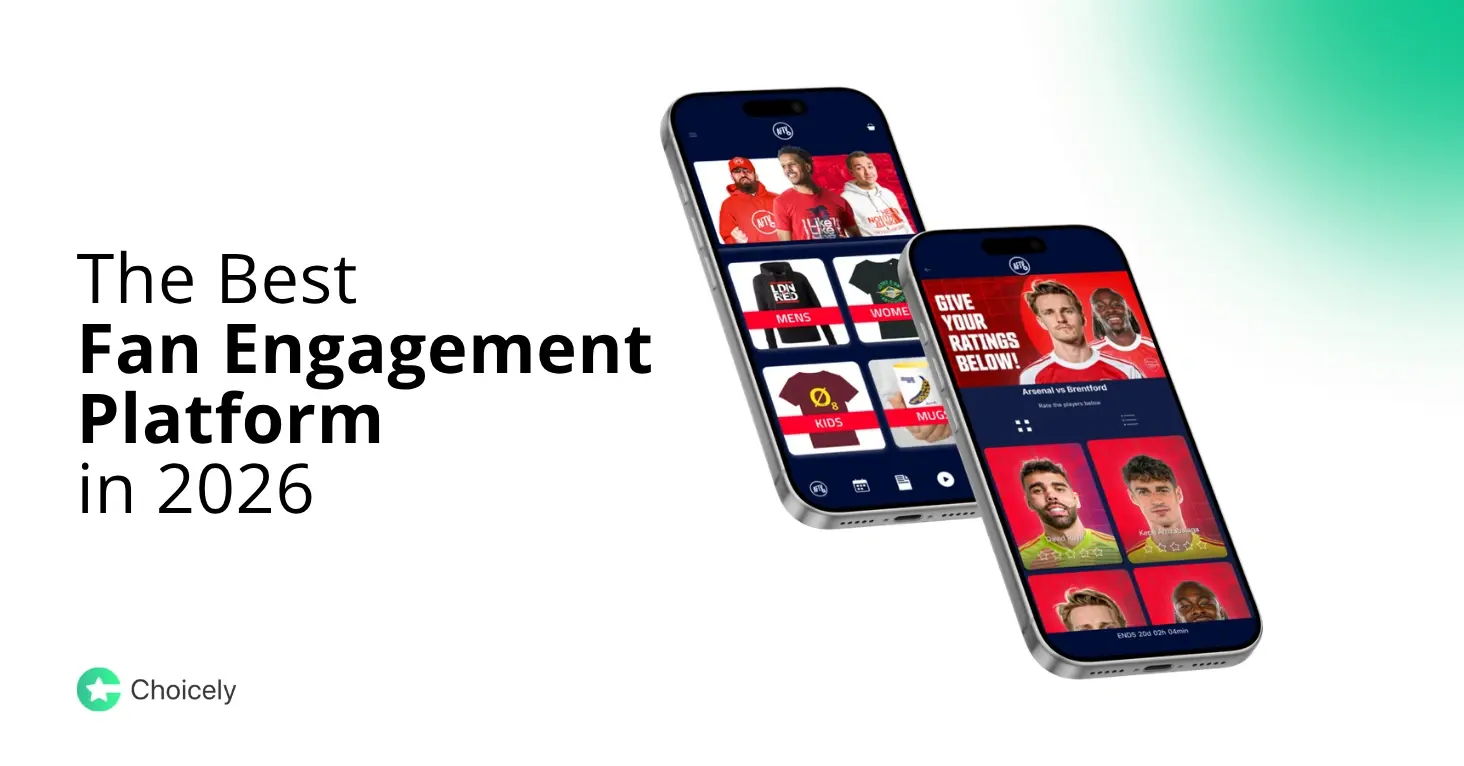
Looking for a mobile app provider for your sports club or league? Here's why Choicely is the platform more...

Most sports organizations have a large audience and surprisingly little data about them. The most valuable...
An engaged fan is a valuable fan. The challenge is turning that value into actual revenue. The good news: a...