
AI tools now let anyone build apps in minutes. But AI-generated code fails security checks at alarming rates — and most builders don't mention it. Choicely is built differently.

.jpg)
Building a functional mobile app used to cost between $30,000 and $700,000, with most projects running three to 12 months. Those numbers are collapsing fast, and most businesses still haven't adjusted their strategy to match the pace.
But here's what the "build anything in minutes" headlines leave out: speed creates a security problem the industry is only now starting to reckon with. That's exactly why we built Choicely the way we did — to make app building fast without compromising on the infrastructure that keeps it reliable and secure.
What Actually Changed
Three things happened in the last two years to make conversational app development viable.
LLMs got genuinely good at generating working code. Models can now produce entire application structures, including database schemas, auth flows, and API integrations. According to McKinsey research, generative AI accelerates certain coding tasks by 35–45%.
No-code platforms matured. They now assemble complex applications from pre-tested modular components, with AI choosing and configuring the pieces based on natural language. Tools like Lovable, Bolt.new, and Replit let non-technical founders ship working apps without writing a line of code. Choicely's AI App Builder takes this further by combining prompt-based generation with a visual drag-and-drop editor, so you're not locked into waiting for AI to complete every step.
Cloud infrastructure became plug-and-play. Auth, payments, storage, and push notifications now have standards, so AI can integrate them automatically instead of building from scratch. On the Choicely platform, all of this comes built-in — engagement features, monetization tools, and native app infrastructure included from day one.
The result: describe what you want (or drag what you need), and the system generates functional features, database structures, and interfaces. What used to take a team of developers six months can now take one person two days.
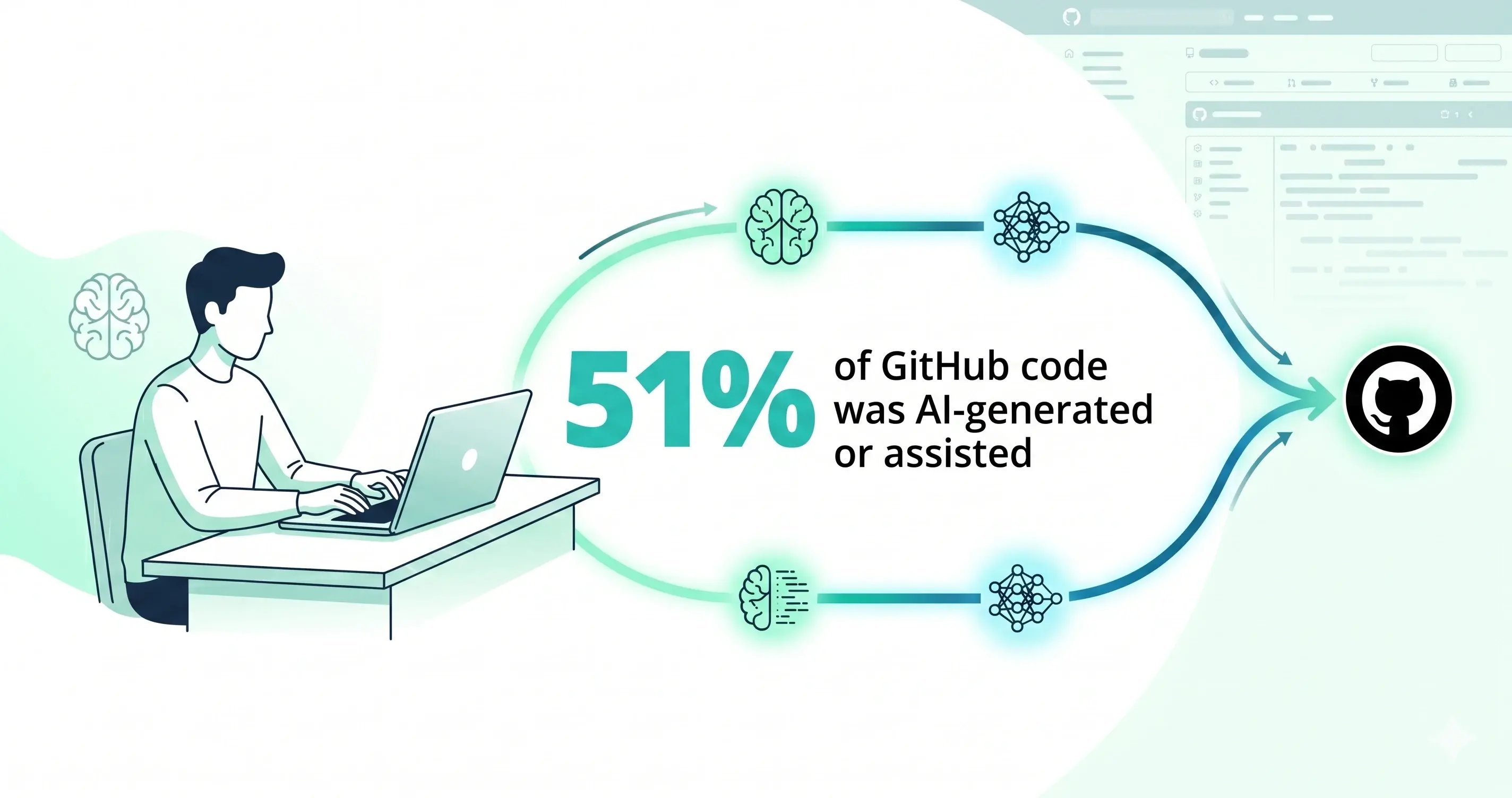
This is the moment that gave rise to what Andrej Karpathy called "vibe coding" — a term Collins English Dictionary named its Word of the Year 2025. By early 2026, 51% of all code committed to GitHub was either generated or substantially assisted by AI.
The Tool Landscape Has Splintered
The market has split into two distinct groups.
AI app builders — Lovable, Bolt.new, Replit, v0, Choicely — generate complete applications from natural language for non-technical users. No coding experience required. Great for prototyping, MVPs, and audience-facing apps.
AI coding assistants — Cursor, Claude Code, Windsurf, GitHub Copilot — work inside development environments to help engineers write, debug, and ship code faster. Cursor crossed $2 billion in ARR by early 2026. Senior developers report 3–5x productivity gains.
The strategic implication is real: when testing costs drop this dramatically, you can run ten experiments for the cost of one. A team wondering whether a mobile loyalty program is worth building can have a working prototype in users' hands within a week. Decisions get made on actual behavior, not focus groups.
Faster experimentation delivers the greatest value when it's supported by application modernization solutions that connect AI-powered applications with existing business systems. Modernizing legacy infrastructure allows organizations to innovate rapidly without sacrificing scalability, security, or operational continuity.
The traditional startup funding model existed largely because technology was expensive to build. That equation is changing. Founders now reach product-market fit with minimal capital, then raise from a position of strength with real user data.
Choicely AI app builder generates native-level apps from prompts, no coding needed
The Part Nobody's Talking About: Security
Speed is genuinely valuable. But it comes with a caveat the "build anything in minutes" headlines tend to skip past.
AI tools are optimized for one thing: making your feature work. Security is largely invisible to the prompt. The model produces what its training data suggests is normal — and a lot of normal code is insecure code. Veracode found that nearly half of AI-generated code contains security flaws, and Georgia Tech's Vibe Security Radar has been tracking real CVEs introduced directly by AI coding tools, numbers that are rising month over month.
This doesn't mean you shouldn't build with AI. It means you should build with AI on infrastructure you can actually trust.
That's something we've thought hard about at Choicely. Our platform has handled events like Eurovision and Miss Universe — millions of simultaneous users, real-time voting, global audiences, zero margin for error. The backend reliability that makes this possible isn't something you generate with a prompt. It comes from years of experience running apps at real scale, for demanding clients, in high-stakes environments. Our AI App Builder lets anyone prototype a complete native app in minutes, but it runs on infrastructure that has already been proven at a scale most platforms never reach.
That foundation matters more than it might seem. Because the security risk in vibe-coded apps isn't mainly in the UI.

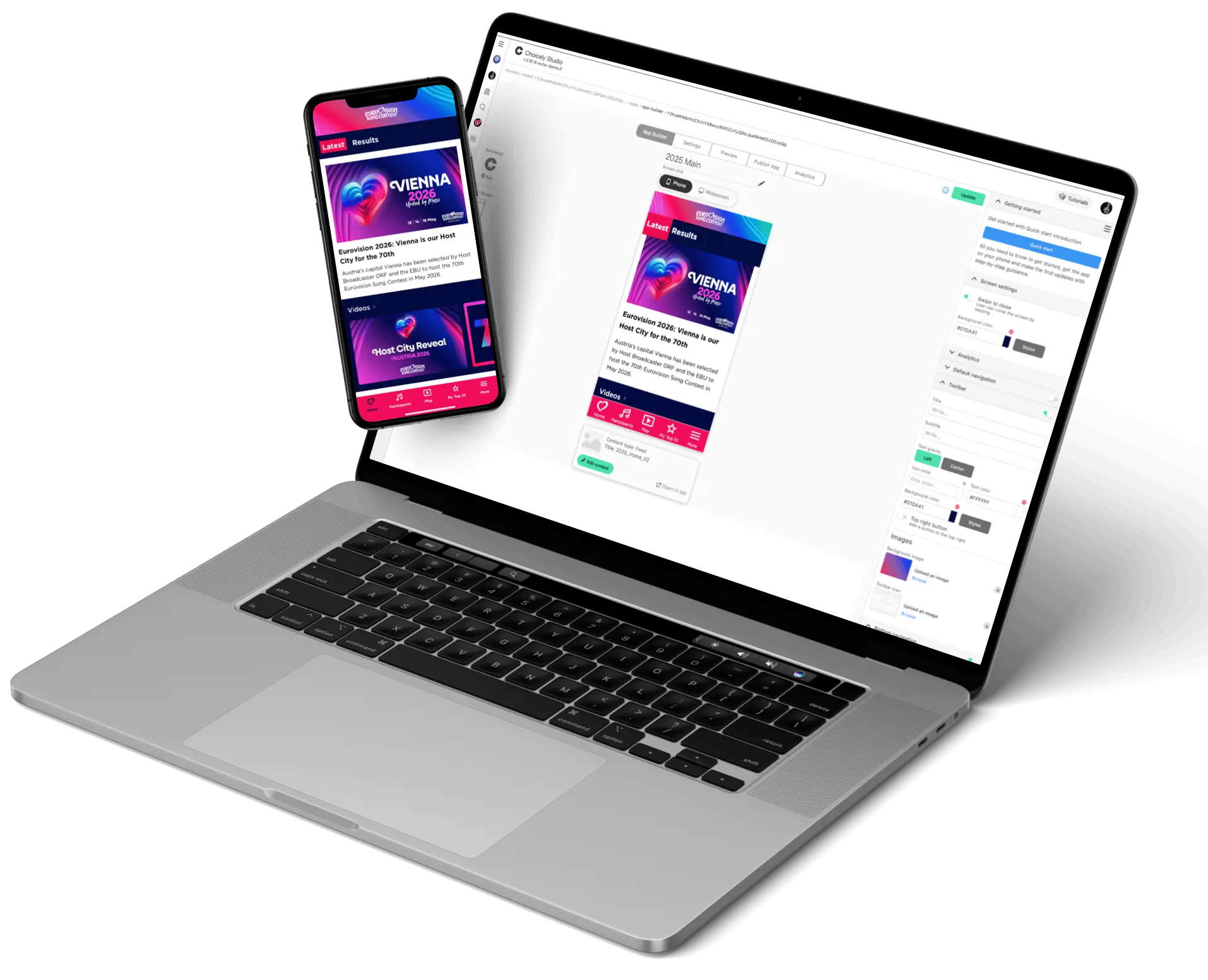
Choicely has been used to build apps with millions of simultaneous users, like the official Eurovision and Miss Universe apps
Frontend vs. Backend: The Distinction That Matters
Most coverage of AI-generated app security conflates two very different problems. They're worth separating.
Frontend vulnerabilities — UI bugs, missing input validation, UX edge cases — are real, but they're also visible, discoverable, and usually fixable without cascading consequences.
Backend vulnerabilities are where the real risk lives. Authentication bypasses, exposed database credentials, broken access controls, misconfigured permissions — these can expose user data at scale, often silently, and often long before anyone notices.
Industry research has found that a significant share of AI-generated apps ship with backend security misconfigurations, and security auditors have uncovered critical authentication flaws in apps with hundreds of thousands of users. These aren't edge cases. They're the predictable result of tools that optimize for shipping fast without a secure backend to build on.
A polished UI does nothing to protect a leaky backend.
You can iterate on the frontend indefinitely without ever touching the architecture that determines whether your users' data is safe. That's the core challenge — and it's why the platform underneath your app matters as much as the speed at which you build on top of it.
Building fast is not the same as building on a stable foundation.
What the Shift Actually Means for Skills
If AI handles implementation, what becomes valuable?
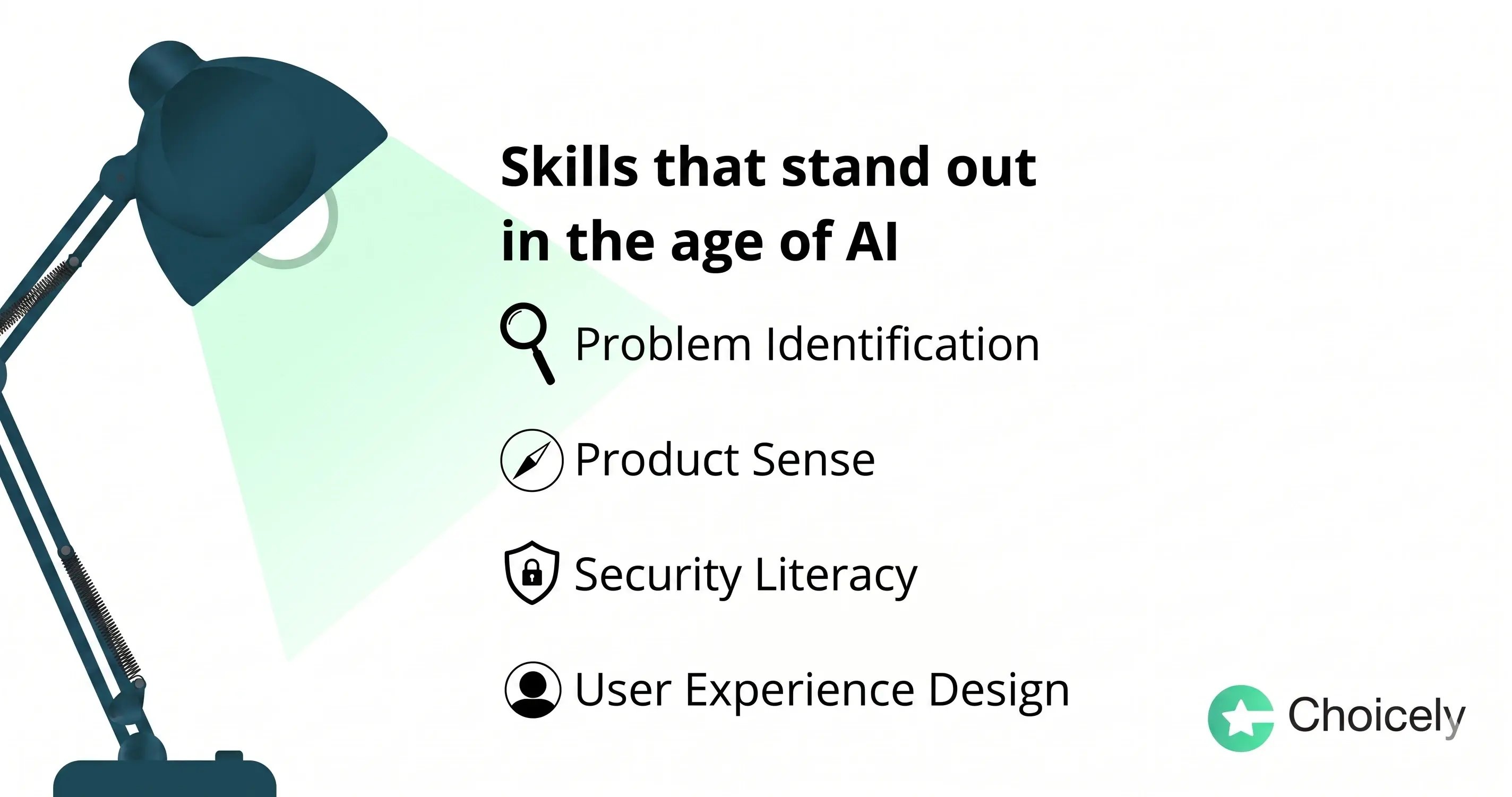
- Problem identification. The hardest part of building successful products has always been figuring out which problems are worth solving, and for whom. When you can build anything quickly, choosing what to build is the real differentiator.
- Product sense. Understanding which features drive engagement, which ones users actually need, and how to sequence a roadmap. AI is nowhere near making those calls.
- Security literacy. Not "write secure code" — most people building with AI tools aren't developers. But knowing what questions to ask, what to audit, and when to bring in expert review. That's now a foundational skill, not an advanced one.
- User experience design. AI generates functional interfaces. Making something people actually want to use still requires a human eye — the ability to identify what's missing and articulate it precisely enough for the tools to execute.
The Clock Is Running
The gap between AI capability and traditional development is narrowing monthly. Organizations embracing these tools early are building compounding advantages: faster iteration, more experiments, better user data, sharper product intuition.
The winners won't necessarily have the most resources. They'll be the ones moving from hypothesis to validated learning the fastest — on a platform built to support that pace.
If you haven't built something with AI tools in the last 30 days, you're already behind. Pick a real problem, spin up a prototype, and get it in front of users. The tools have never been more capable — and when the platform underneath is built for scale and security from day one, there's nothing to hold you back.
The Choicely AI App Builder is exactly that.

Build your own app by chatting with AI

Create mobile apps for App Store & Google Play by chatting with Choicely AI
Keep reading, here are some similar posts

Last updated: October 7, 2026. Prices verified on each vendor's pricing page on that date; we re-check this...

How can businesses create AI-powered applications quickly and efficiently? This was one of the main themes at...
Building or extending mobile apps doesn’t have to be complicated. With the Choicely Mobile App SDK, you can...